
Homes and buildings
Centipedes: identification and control
Many-legged speedsters that scare more than they bite!
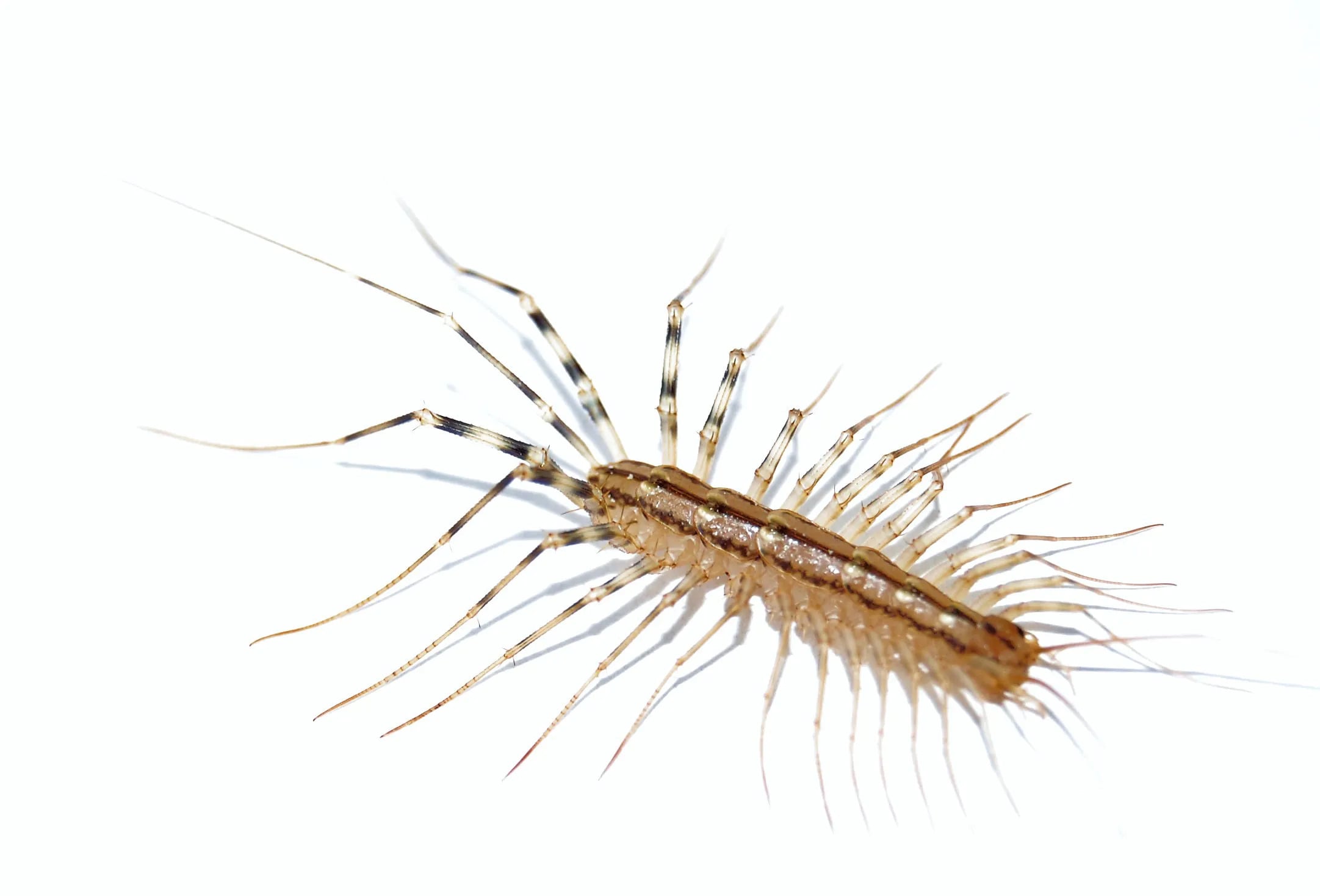

Physical characteristics
Centipedes have a long, segmented body with one pair of legs per segment. Despite their name, the number of legs varies from 30 to 354. Their size ranges from 4 to 20 cm, depending on the species. They have long antennae and a pair of venomous claws behind the head.
Biology and behavior
They are nocturnal predators, feeding on other arthropods. They prefer damp and dark places like basements, bathrooms, and gardens. Centipedes are fast and can live from 1 to 6 years. They are not social and usually live solitarily.
Harm
Centipedes rarely cause significant problems. They can bite in defense, which can be painful but rarely dangerous to humans. Their presence is often an indicator of other insects in the home, as they are predators.
What you can do
Reduce humidity in your home by improving ventilation and using dehumidifiers. Seal cracks and openings around the building's foundation and around pipes. Remove unnecessary organic waste and leaf piles around the home. Use dehydrating powders like diatomaceous earth in problem areas.
How we treat it
Professional control
Our approach to centipede control includes identifying and eliminating favorable conditions for them. We apply targeted insecticides in key areas such as the building perimeter, entry points, and damp areas. We offer a comprehensive property inspection and recommendations for reducing humidity and removing potential shelters. If necessary, we also control other insects that attract centipedes.
We set the exact price after a free on-site inspection.
How the price is setFree inspection
Dealing with centipedes?
The inspection and quote are free. We come to the property, identify the species and the extent of the infestation, and propose a treatment plan with a guarantee.