
Greenhouses
Greenhouse Whitefly: identification and control
Tiny white flying clouds that turn your plants into their all-you-can-eat buffet!
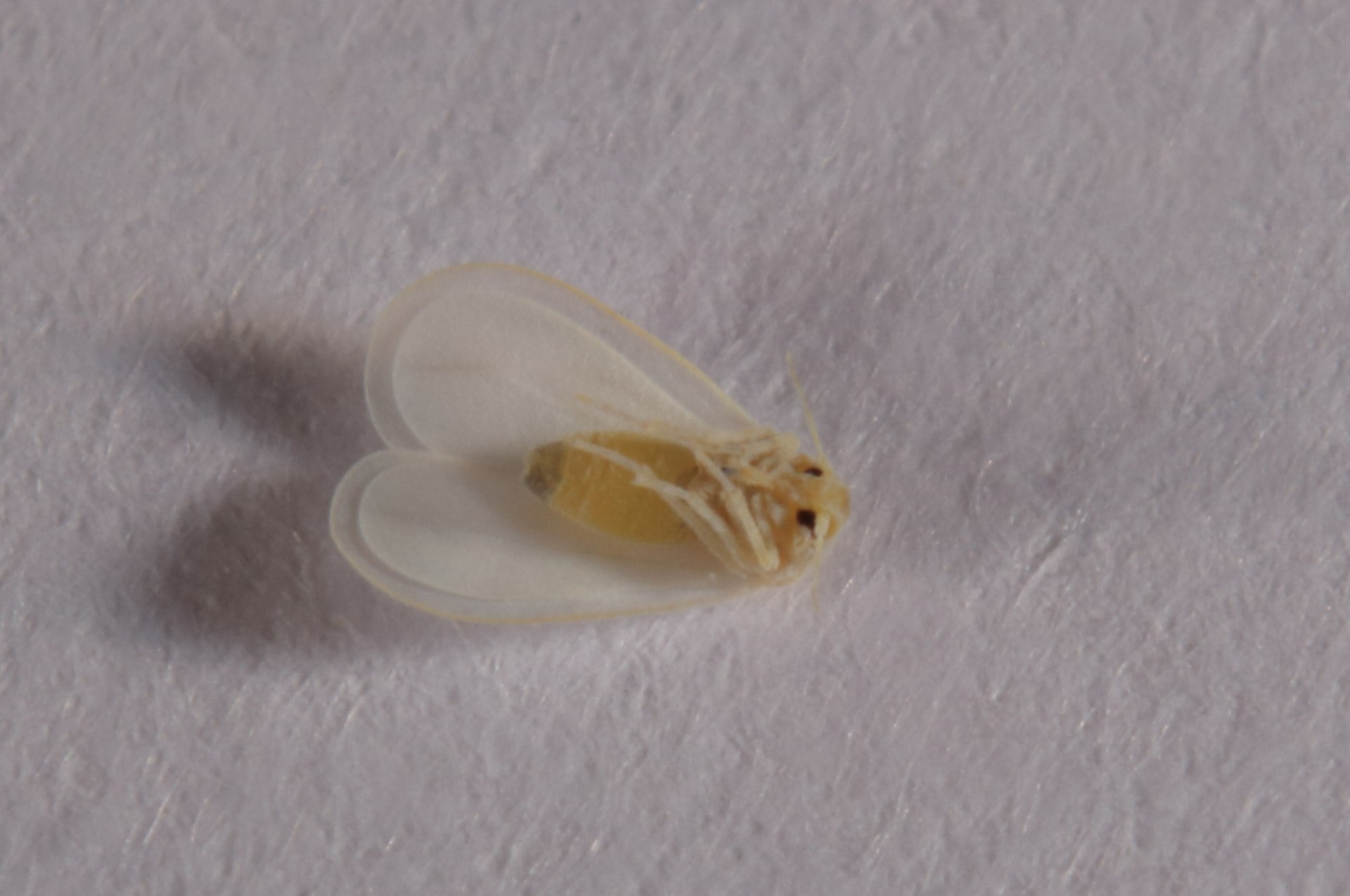

Physical characteristics
The greenhouse whitefly (Trialeurodes vaporariorum) is a small insect about 1.5 mm long. Adults have white, waxy wings and a yellowish body. Nymphs are flat, oval, and translucent.
Biology and behavior
They prefer warm and humid conditions, typical of greenhouses. Females lay eggs on the underside of leaves. Development from egg to adult takes about 3-4 weeks under optimal conditions. Adults and nymphs feed on plant sap.
Harm
Whiteflies weaken plants by sucking out nutrients. They excrete honeydew, which leads to the development of sooty mold on leaves. They can transmit viruses between plants. In severe infestations, leaves turn yellow and fall off, and growth is significantly stunted.
What you can do
Regularly inspect plants, especially the underside of leaves. Use yellow sticky traps for monitoring and control. Remove heavily infested leaves or plants. Maintain good ventilation in the greenhouse. Use biological control with parasitic wasps (Encarsia formosa) or predatory bugs.
How we treat it
Professional control
Our approach includes integrated pest management. We conduct a detailed inspection and assessment of the infestation level. We apply a combination of biological control and selective insecticides. We use systemic products for long-lasting protection in severe infestations. We offer monitoring and prevention programs, including optimizing greenhouse conditions. We train staff for early detection and proper pest management.
We set the exact price after a free on-site inspection.
How the price is setFree inspection
Dealing with whiteflies?
The inspection and quote are free. We come to the property, identify the species and the extent of the infestation, and propose a treatment plan with a guarantee.