
Homes and buildings
Hornets: identification and control
The big cousins of wasps, with a louder buzz and sting!

Physical characteristics
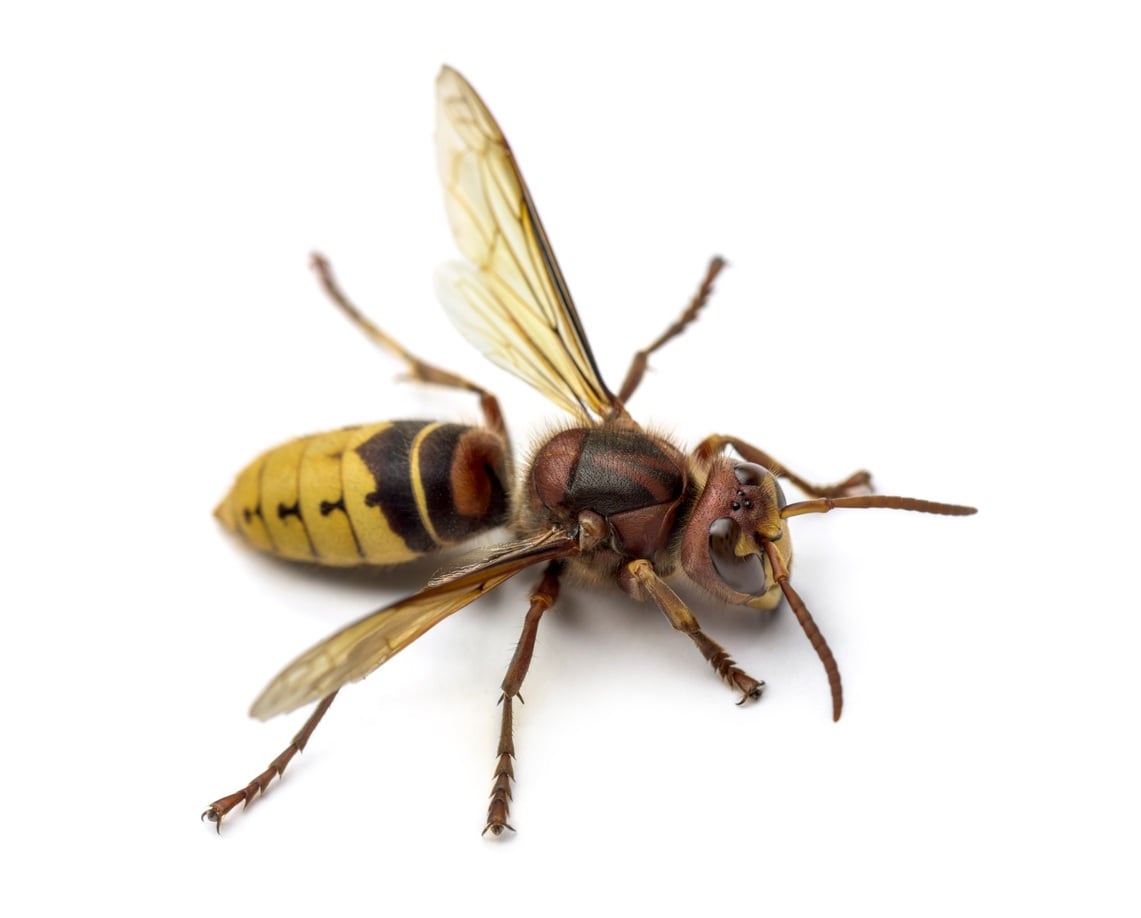
Hornets (genus Vespa) are the largest members of the social wasps, with the European hornet (Vespa crabro) reaching up to 3.5 cm in length (queens up to 5.5 cm). They are distinguished by a massive head and strong jaws. Coloration varies but often includes brown, red, yellow, and black patterns. The body is segmented, with a clearly defined 'waist' between the thorax and abdomen. They have two pairs of wings and a stinger they can use multiple times.
Biology and behavior
Hornets are social insects living in colonies founded by an overwintered queen in spring. They build large nests from chewed wood mixed with saliva, resembling paper. Nests are usually located in hidden, protected places - tree hollows, under roofs, in abandoned buildings, or sometimes in the ground. Adult hornets feed mainly on nectar and fruit juices but actively hunt other insects (bees, flies, caterpillars) to feed their larvae. They exhibit aggression primarily near their nest, especially if they feel threatened.
Harm
The main harm to humans is related to their painful sting. Hornet venom contains substances that can cause severe pain, swelling, and redness. In allergic individuals, a sting can lead to anaphylactic shock, which is life-threatening. Multiple stings can also be dangerous, even for non-allergic people. Hornets can also cause damage to beekeepers, as they sometimes attack and destroy beehives. When building nests in buildings, they can damage insulation or wooden elements.
What you can do
Avoid approaching hornet nests. If you spot a nest, mark the area and warn others. Do not make sudden movements or try to kill them near the nest, as this can provoke an attack. Keep your yard clean of fallen fruit that might attract them. Use wasp traps placed far from residential areas to reduce the population. Be especially careful when working in the garden, mowing grass, or pruning trees during summer and autumn.
How we treat it
Professional control
Removing a hornet nest is extremely dangerous and should only be done by trained professionals with specialized protective gear. Our technicians will identify the hornet species and choose the safest and most effective method to eliminate the colony, usually by treating the nest with insecticidal powder or pressurized spray. Treatment is primarily carried out in the evening or early morning when most hornets are in the nest and less active. After the colony is destroyed, the nest can be safely removed.
We set the exact price after a free on-site inspection.
How the price is setFree inspection
Dealing with hornets?
The inspection and quote are free. We come to the property, identify the species and the extent of the infestation, and propose a treatment plan with a guarantee.