
Yards and open areas
Mole Rat (Spalax): identification and humane deterrence
An underground digger that turns your garden into a minefield!
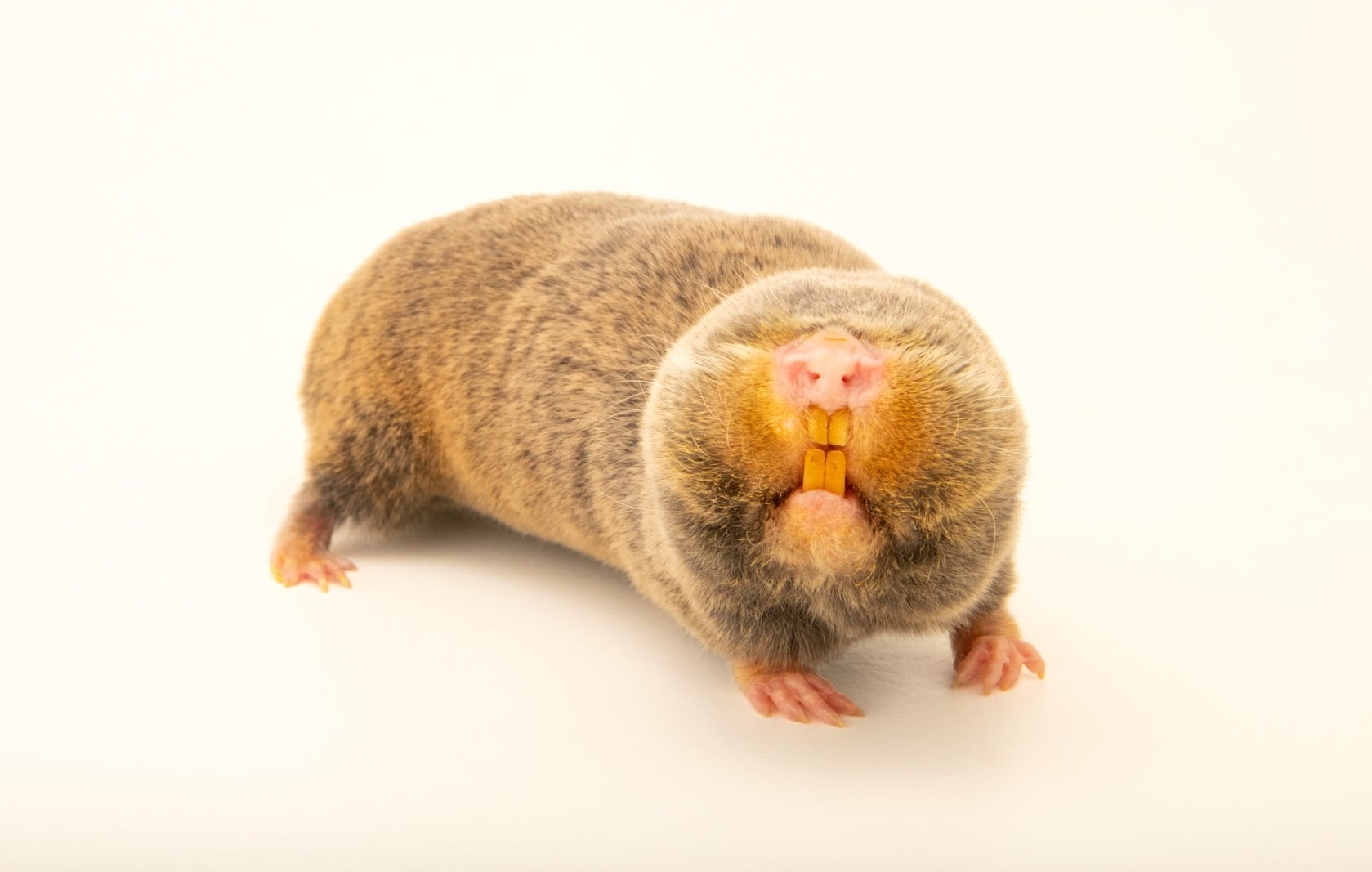

Physical characteristics
The mole rat (genus Spalax) is a medium-sized rodent, excellently adapted to an underground lifestyle. Its body is massive, cylindrical, 15-30 cm long. It has no visible external ears or tail. The eyes are rudimentary, covered with skin, and completely non-functional (hence the name 'blind'). The head is large, wedge-shaped, with powerful incisors used for digging along with its strong forelimbs. The fur is dense, soft, usually grayish-brown.
Biology and behavior
This rodent spends almost its entire life underground, building complex networks of tunnels at different levels. Surface tunnels are for feeding, while deeper ones are for living and breeding. It feeds exclusively on underground plant parts - roots, tubers, bulbs, rhizomes. It can collect large quantities of food in its underground stores. The mole rat is a territorial and solitary animal, except during breeding periods. It is active year-round, without hibernation. The pushed-out soil forms characteristic large mounds, which are larger and more scattered than those of a mole.
Harm
The main harm from the mole rat is related to its feeding habits and digging activity. It destroys the root systems of various cultivated plants - vegetables (potatoes, carrots, beets), fruit trees, vineyards, ornamental plants, and lawns. This leads to plant death or severely reduced yields. The soil mounds disrupt the aesthetic appearance of gardens and parks, hinder mowing, and can damage agricultural machinery. Tunnels can disrupt soil structure and cause problems with irrigation or drainage.
What you can do
Control is difficult due to its hidden lifestyle. Mechanical methods like setting special traps in active tunnels can be attempted (requires experience). Repellents are rarely effective in the long term. Planting strong-smelling plants (castor bean, marigold, daffodils) around affected areas may have some deterrent effect. Deep plowing can temporarily destroy tunnels. Keeping the garden clean of weeds and plant debris may slightly reduce its attractiveness.
How we treat it
Professional control
Combating the mole rat requires specific knowledge and methods. Our specialists can offer an integrated approach. This includes precise placement of professional traps in active tunnels, which is the most effective method. In certain situations and with strict safety measures, fumigation of the tunnel system with special preparations (gassing) may be applied. We conduct a thorough inspection to assess the problem and develop the most appropriate control strategy, tailored to the specifics of the terrain and the extent of the infestation.
We set the exact price after a free on-site inspection.
How the price is setFree inspection
Dealing with the mole rat?
The inspection and quote are free. We come to the property, identify the species and the extent of the infestation, and propose a treatment plan with a guarantee.