
Greenhouses
Thrips: identification and control
Miniature vampires that turn your flowers into Swiss cheese!
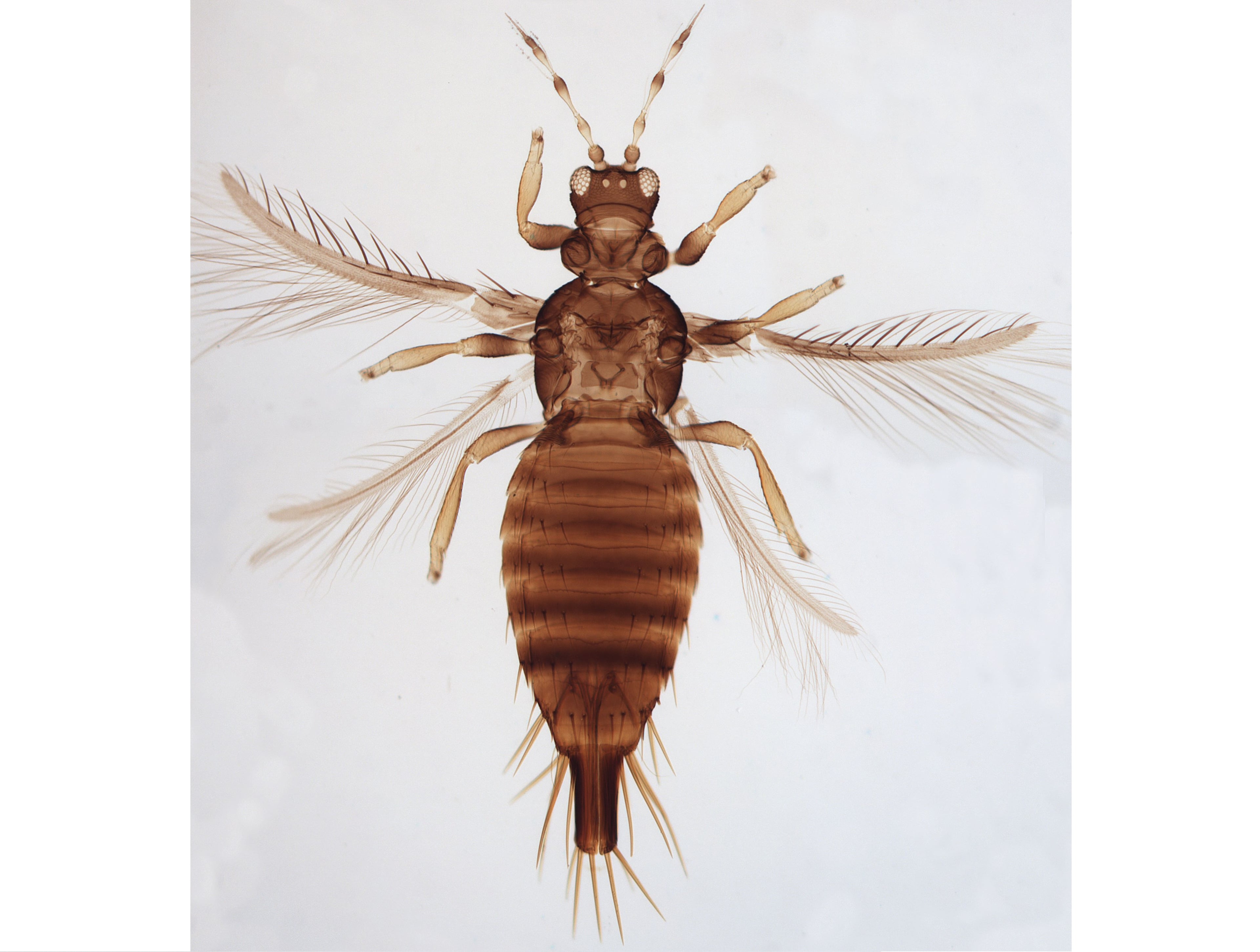

Physical characteristics
Thrips are tiny insects, 0.5-2 mm long. They have an elongated body and two pairs of narrow wings with fringed edges. Their color varies from yellow to dark brown, depending on the species.
Biology and behavior
They develop rapidly, especially in warm conditions. Females lay eggs in plant tissues. Larvae and adults feed on plant sap, preferring soft, succulent parts of plants. Some species also feed on other small arthropods.
Harm
They cause silvery or bronze spots on leaves and flowers. They deform growth tips and flowers. They can transmit viruses between plants. In severe infestations, leaves discolor and dry out, and flowers drop prematurely.
What you can do
Regularly inspect plants, especially tips and flowers. Use blue or yellow sticky traps for monitoring. Remove and destroy heavily infested plant parts. Maintain good hygiene in the garden or greenhouse. Use resistant varieties when possible.
How we treat it
Professional control
Our approach includes integrated pest management. We conduct a detailed inspection and identification of thrips species. We apply a combination of biological control (using predatory mites and bugs) and selective insecticides. For severe infestations, we use systemic products. We offer monitoring and prevention programs, including optimizing growing conditions. We train clients for early detection and proper pest management.
We set the exact price after a free on-site inspection.
How the price is setFree inspection
Dealing with thrips?
The inspection and quote are free. We come to the property, identify the species and the extent of the infestation, and propose a treatment plan with a guarantee.