
Homes and buildings
Fleas: identification and control
Tiny jumpers with a big appetite for you and your pets!
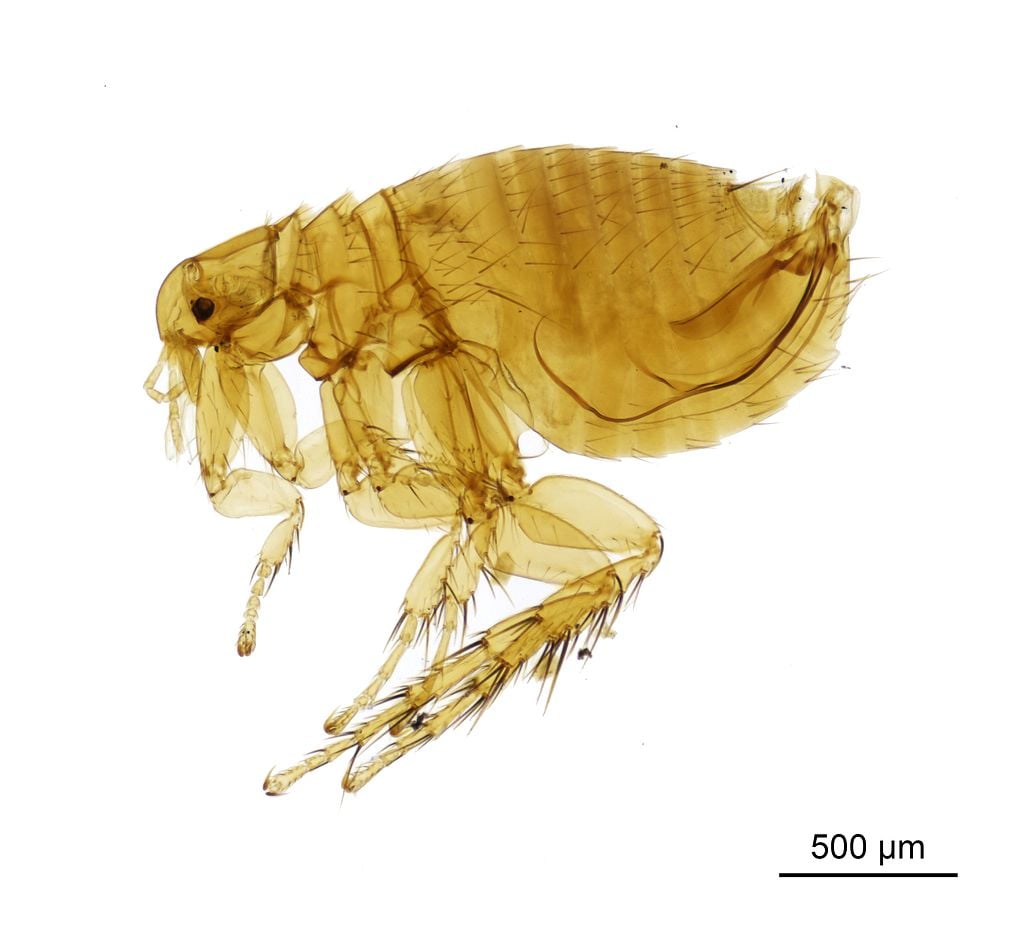

Physical characteristics
Fleas are small wingless insects, 1.5-3.3 mm in size. They have laterally flattened bodies, allowing them to move easily through animal fur. They possess strong hind legs for jumping and a hard exoskeleton.
Biology and behavior
They feed on the blood of mammals and birds. Females lay eggs that fall off the host and hatch in the environment. Larvae feed on organic debris and pupate before becoming adults. The entire life cycle can take from 2 weeks to 8 months, depending on conditions.
Harm
Flea bites cause itching and discomfort in both humans and animals. They can transmit diseases and cause allergic reactions. In severe infestations, pets can develop anemia. Fleas can also transmit tapeworm larvae.
What you can do
Regularly clean and vacuum, especially in areas where pets rest. Wash pet bedding frequently. Use approved flea control products on pets. Keep grass mown and remove organic debris from the yard.
How we treat it
Professional control
Our approach includes comprehensive treatment of the home and yard. We use a combination of fast-acting adulticides and insect growth regulators to break the flea life cycle. We apply indoor and outdoor treatments, focusing on hidden areas and places where pets spend time. We also offer follow-up treatments for complete elimination of the infestation.
We set the exact price after a free on-site inspection.
How the price is setFree inspection
Dealing with fleas?
The inspection and quote are free. We come to the property, identify the species and the extent of the infestation, and propose a treatment plan with a guarantee.